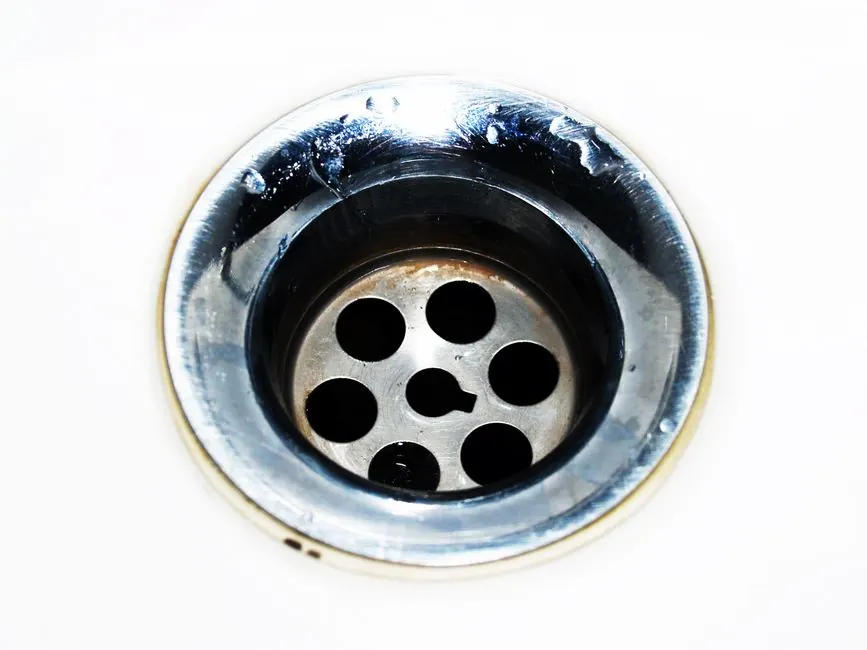
A kitchen sink that drains slowly is almost always a partial clog sitting in the P-trap or the horizontal run behind the cabinet wall - not a problem with your pipes' size or your water pressure. In Port Charlotte, the most common culprit is congealed grease mixed with food particles and hard-water mineral scale, and it builds up over months rather than days. The rest of this post walks through the specific causes we see on service calls here, the fixes you can try yourself this afternoon, and the point where a drain snake or hydro jetting is the only thing that will actually clear the line.
The short answer: what's blocking your kitchen drain
A slow kitchen sink drain in Port Charlotte is a flow restriction, and flow restrictions come from three places: the trap under the sink, the branch line running to the main stack, or the vent pipe on the roof that lets air in behind the water. When the vent is blocked, water gurgles and drains in fits and starts. When the trap or branch line is blocked, water just sits there and creeps down.
Kitchen sink drain cleaning is the category of work that clears that restriction - mechanically, with a snake or auger, or with high-pressure water - rather than chemically. That distinction matters because most of what you pour down the drain at the grocery store does not remove the blockage. It just softens the outer edge of it and lets the problem come back in three weeks.
If you have ever watched water climb the other side of a double basin while you rinse a plate, you already know the difference between a slow drain and a clogged one. A slow drain is a warning. A clog is the same problem after it has finished growing.
Why is my kitchen sink draining so slowly in Port Charlotte?
Port Charlotte's water is the first thing to understand. Our municipal supply runs hard - typically in the 180 to 250 mg/L range for calcium carbonate - and that calcium and magnesium precipitates out inside pipes as scale. On a kitchen drain, that scale gives grease and food particles something to grab onto. A pipe that would stay clear for years in a soft-water city can start narrowing here in eighteen months.
The second local factor is how we cook. This is a grilling-and-frying town. Bacon grease, sausage drippings, olive oil from a sheet pan - most of it gets wiped into the sink with a paper towel and rinsed. Warm grease is liquid. By the time it travels four feet down the branch line, it has cooled below its congealing point and is coating the pipe wall like candle wax.
The third factor is the housing stock. A large share of Port Charlotte homes were built between the 1970s and the early 2000s, and many still have original cast iron or early ABS drain lines. Cast iron roughens with age. Once the interior wall is pitted, every bit of grease and coffee grounds that passes through leaves a little behind. We see this constantly in the older neighborhoods off Edgewater and in the streets around slow draining sink Port Charlotte FL calls that come in from the mid-county area.
None of that means your house is failing. It means the drain has an opinion about what you put in it, and it has been keeping score.
The six causes we find most often
On a typical Kitchen Sink Drain Cleaning Port Charlotte FL visit, the blockage falls into one of six buckets. Knowing which one you have tells you whether a plunger will work or whether you need equipment.
1. Grease and fat buildup
Grease is the number one cause of slow kitchen drains nationwide, and it is number one here by a wide margin. It does not block the pipe all at once. It coats the bottom third of the pipe first, where the water runs slowest, and the coating thickens every time you cook. By the time you notice standing water, the pipe is often 60 to 80 percent closed.
2. Food particles and coffee grounds
Rice, pasta, eggshell fragments, coffee grounds, and fibrous vegetable scraps all sink and settle. They do not dissolve. They form a soft mat that grease then glues to the pipe wall. A garbage disposal makes this worse, not better, because it turns a carrot into a hundred small pieces that travel further before they stop.
3. Mineral scale from hard water
Scale narrows the pipe from the inside over years. It also roughens the surface so nothing slides past. If your fixtures show white crusting around the aerator or the faucet base, the drain lines have the same problem.
4. A blocked or improperly installed vent
Every drain needs air behind it. If the vent stack on your roof is plugged with debris, a bird nest, or a wasp nest - which happens here more than people expect - water will drain in a slow gulp, and you will hear a gurgle from the adjacent sink or the dishwasher. A slow drain that gurgles is a vent symptom, not a clog symptom.
5. A partial clog in the P-trap
The U-shaped trap under the sink is designed to hold water and catch debris. It catches a lot. When it is half full of sludge, water has to push through the sludge to get out, and the drain slows to a trickle.
6. A failing disposal or a dishwasher draining into the same branch
If your dishwasher empties into the same branch line as the sink - which is standard - a slow sink often means the dishwasher is adding grease and food to an already restricted pipe. A worn disposal that no longer grinds finely enough makes the same contribution.
How to fix a slow draining kitchen sink in Port Charlotte
Start with the least invasive step and work up. If you have already poured two bottles of chemical drain cleaner down the sink, stop - you have probably made the clog harder to remove and put a corrosive liquid into a pipe that may already be thin.
- Boil a full kettle of water. Pour it down the drain in two stages, waiting thirty seconds between them. This melts the outer layer of grease. It works on light buildup and buys you a week or two.
- Mix baking soda and vinegar. Half a cup of each, let it fizz for ten minutes, then flush with hot water. This is a maintenance step, not a cure. It will not remove a real clog.
- Pull the P-trap. Put a bucket underneath, unscrew both slip nuts by hand, and dump the trap into the bucket. Wear gloves. What comes out is usually black, greasy, and smells like a restaurant dumpster. Clean it with a bottle brush and reassemble.
- Snake the branch line. A hand snake from the hardware store will reach 15 to 25 feet. Feed it in through the trap arm, crank clockwise, and pull back the debris. This clears most single-fixture clogs.
- Call for a professional auger or hydro jet. If the snake comes back clean and the drain is still slow, the blockage is past the reach of a hand tool. That is when we bring the machine.
One more thing worth checking before you buy a snake: the disposal. Run it with the water off and listen. If it hums without turning, the flywheel is jammed. If it turns but the drain stays slow, the disposal is not your problem.
If you want the pricing picture before you decide, our Drain Cleaning Cost Port Charlotte FL page breaks down what a single-fixture clear-out runs versus a main line jet, and what changes the number.
Common mistakes that make it worse
The single worst thing you can do to a slow kitchen drain is pour caustic drain cleaner down it repeatedly. Those products generate heat, and in an older ABS or cast iron line, heat plus a partially blocked pipe is how you end up with a split fitting behind the cabinet wall. We have replaced more than one trap arm because of it.
The second mistake is running the disposal as a cure. A disposal does not clear a drain. It shreds what is in the basin and sends it into a pipe that is already restricted. If the drain is slow, running the disposal just adds more material to the clog.
The third is ignoring the second basin. On a double-bowl sink, both bowls share one trap and one branch line. If the left bowl drains fine and the right one is slow, the clog is in the tailpiece or the trap, not the wall. That is a fifteen-minute fix, not a service call.
The fourth is assuming a slow drain is normal for an old house. It is not. A drain that was installed correctly and maintained will drain at full speed for decades. Slow is a symptom, and it gets worse.
And the fifth: pouring cooking oil into the sink because it is "just a little." A quarter cup of oil per week is thirteen cups a year going into a pipe that holds maybe two gallons. Do the math on that one.
When to call a professional
Call us when the drain is slow after you have cleared the trap, when more than one fixture in the house is draining slowly, when you hear gurgling in a sink you are not using, or when water backs up into the dishwasher. Those four symptoms point to a blockage past the fixture - in the branch line, the stack, or the main - and a hand snake will not reach it.
We also get calls when a slow drain has been slow for months and then stops entirely on a Sunday. That is the same clog, just finished. Our team handles Emergency Drain Cleaning Port Charlotte FL for exactly that situation, and we would rather clear it at 9 a.m. on a Tuesday than at 11 p.m. on a holiday.
One more reason to call early: a slow kitchen drain is often the first sign of a bigger problem downstream. If the restriction is in the main line, every fixture in the house is affected, and the fix is a main line jet rather than a sink clear-out. Catching it while it is still a slow sink is cheaper than catching it after a backup.
If you are a landlord or property manager with units in the area, we also handle Commercial Drain Cleaning Port Charlotte FL for multi-unit buildings and rental turnovers, where the same grease problem repeats every tenant.
Frequently Asked Questions
Why is my kitchen sink draining so slowly in Port Charlotte?
Grease, food particles, and hard-water mineral scale have narrowed the pipe, usually in the P-trap or the branch line behind the cabinet. Port Charlotte's water runs 180-250 mg/L hardness, which gives grease something to cling to. A slow drain is a partial clog, not a plumbing design flaw.
How do I fix a slow kitchen sink drain in Port Charlotte?
Boil a kettle of water and pour it down in two stages, then pull and clean the P-trap. If the drain is still slow, snake the branch line 15-25 feet. If a hand snake comes back clean and the drain is still slow, the blockage is past the fixture and needs a professional auger or hydro jet.
Does a slow kitchen sink drain mean a clog in Port Charlotte?
Yes, in roughly 9 out of 10 cases. The exceptions are a blocked vent stack, which causes gurgling and uneven draining, and a failing disposal that is adding debris faster than the pipe can clear it. Both are still restrictions, just in different places.
Who should I call for a slow kitchen sink drain in Port Charlotte FL?
Call a licensed drain cleaning company that uses mechanical clearing - a snake, auger, or hydro jet - rather than chemical treatments. Port Charlotte ClearPath Drain Solutions handles kitchen sink and main line clogs across the area, and we tell you the price before we start.
Will chemical drain cleaner fix a slow kitchen sink?
Rarely, and it often makes things worse. Caustic cleaners soften the outer edge of a grease clog without removing it, and the heat they generate can damage older ABS or cast iron fittings. Mechanical clearing removes the blockage instead of shrinking it.
Get help with Drain Cleaning in Port Charlotte
If your kitchen sink has been draining slow for more than a week, the clog is still growing. We clear it with a snake, auger, or hydro jet, test the line before we leave, and tell you what caused it so it does not come straight back.
Call Port Charlotte ClearPath Drain Solutions at (941) 393-1066 and we will get your kitchen back to draining the way it should.